Yükleniyor

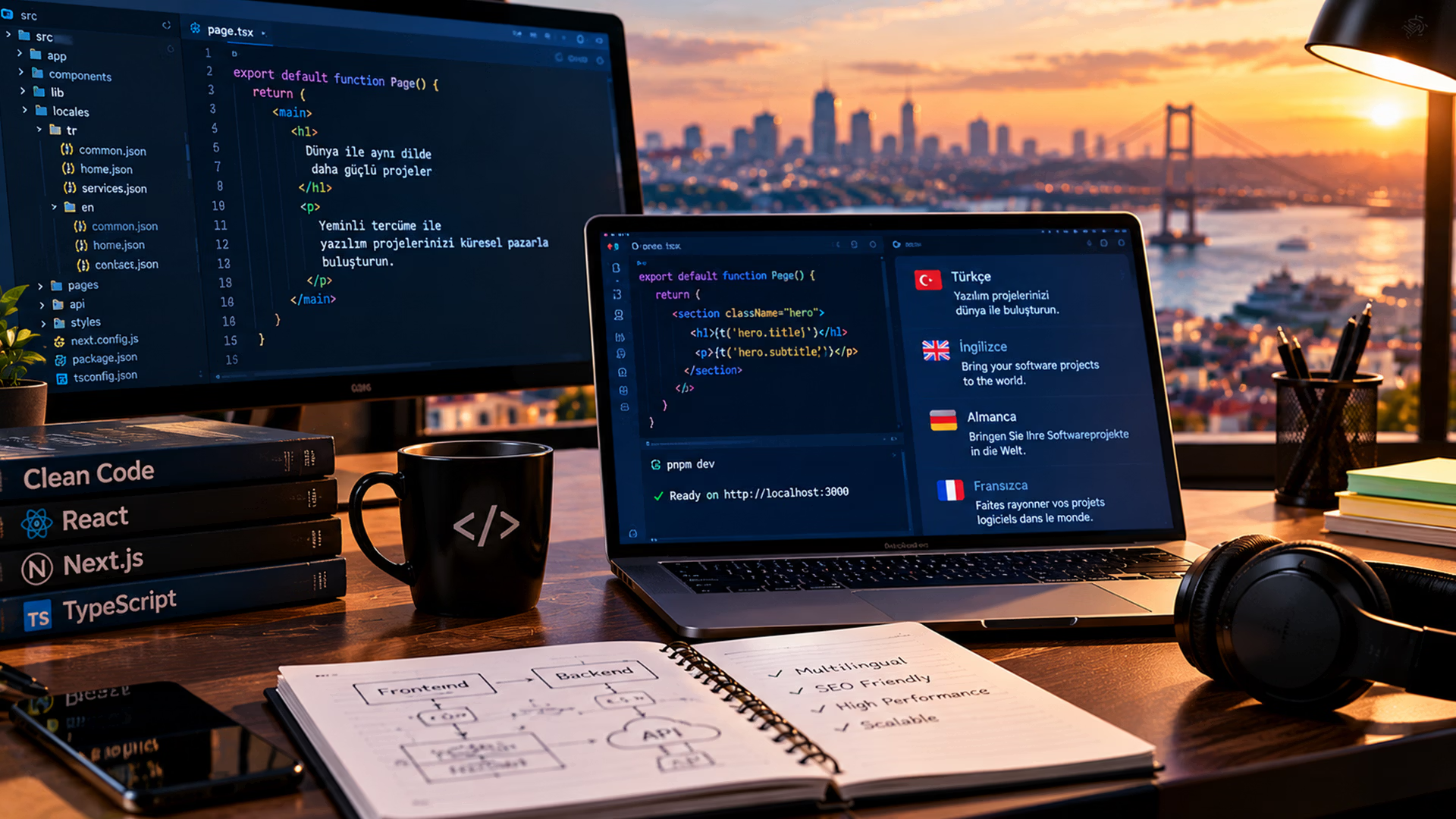
Sworn and technical localization for SaaS interfaces, iOS and Android apps, API documentation, cybersecurity protocols and public IT tenders by software specialists.
IT and software translation is more than transferring text. It is a comprehensive localisation (L10n) engineering process that preserves code blocks, variable placeholders, character limits and user interface (UI/UX) ergonomics. A single incorrect term in a SaaS interface, notification or error message can directly increase user churn.
IT projects have distinct legal and technical needs. Technical specifications, licence agreements, service level agreements (SLAs) and ISO 27001 security certificates for large public-sector software tenders require sworn and notarised translation. SaaS platforms, mobile apps, API and SDK documentation, games and help-centre articles are localised by our professional software team directly in JSON, XML, XLIFF, PO and YAML formats while preserving code integrity.
Our IT translators understand software development and modern CI/CD workflows. We test localised interfaces on screen through linguistic quality assurance (LQA) to check for text overflow and a consistent user experience.
Our linguists with domain-specific background work in strict compliance with international standards, statutory terminology, and custom corporate translation memories.
We plan the workflow according to whether your IT files need administrative or legal certification or direct digital integration:
A legal translation stamped by an IT translator sworn before a notary, as required by public authorities and courts.
Developer-friendly translation directly in JSON, XML or PO files when notarial certification is not required.
We use localisation engineering tools to protect tags in software source files such as JSON, XML and XLIFF; tender specifications, however, require sworn translation certified by a notary.
Button, label and error-message strings in JSON, XML, XLIFF, YAML and PO formats.
Endpoint descriptions, code samples, integration guides and parameter glossaries.
Service level agreements, end-user licence agreements (EULAs) and cloud deployment protocols.
Network penetration test reports, data security policies, SOC audits and security guides.
SaaS user guides, FAQ libraries and interactive help-desk articles.
Product titles and descriptions tailored to local search intent on the App Store and Google Play.
Simultaneous localisation of menus, billing and notifications for a cloud SaaS platform in 15 languages.
Notarised preparation of specifications for foreign software submitted to a large public tender.
Cultural adaptation of iOS and Android interfaces while respecting button and character limits.
We lock variables such as %s and {variable} in JSON, PO and XLIFF files and never alter the code structure.
An IT translator familiar with software development and UI/UX workflows manages the project.
We select concise, effective wording that fits button widths and mobile screen limits.
We simulate translated text in the interface and test for overflow and contextual accuracy.
Files are delivered ready to commit to your repository; tender files are notarised when required.
Software localisation fees depend on file structure, word volume, translation memory (TM) match rates and notarial requirements.
Code blocks and programming tags are excluded from word counts; only translatable text is billed.
Yes. We accept source files in JSON, YAML, PO, XML, XLIFF and CSV directly, avoiding extra conversion work for your developers, and return them without changing code structures or tags.
We set character limits in advance as constraints in the translation memory. Translators choose concise alternatives that fit UI fields and support a better user experience.
Yes. Foreign-language specifications submitted to software tenders by TÜRKSAT, BTK and other public bodies require sworn translation certified by a notary.
Yes. We work with technology companies in continuous integration models and can translate new interface strings and return them within hours.
No. Function names, parameters and code examples remain unchanged; only explanations and instructions are localised.
Submit your documents; our domain experts will review them and present the optimal sworn or professional translation proposal in minutes.